
Insurance Valuations Melbourne
Protect Your Property Against Underinsurance
An insurance valuation provides an independent assessment of the estimated cost to reinstate buildings and other insured improvements following damage or destruction. Unlike a Market Value assessment, an insurance valuation focuses on reinstatement costs rather than the price a property might achieve in the open market.
ValuConsult provides insurance reinstatement cost assessments for residential, commercial, industrial and retail properties throughout Melbourne and metropolitan Victoria. Our assessments consider the building's construction, size, materials and relevant reinstatement costs, including demolition, debris removal, professional fees and other applicable allowances.
An appropriately assessed sum insured helps property owners, investors and Owners Corporations make informed decisions about their building insurance coverage and reduce the risk of underinsurance.

What Is an Insurance Valuation?
An insurance valuation, also known as an insurance reinstatement cost assessment, estimates the cost of rebuilding or reinstating a property's insured buildings and improvements following an insured loss.
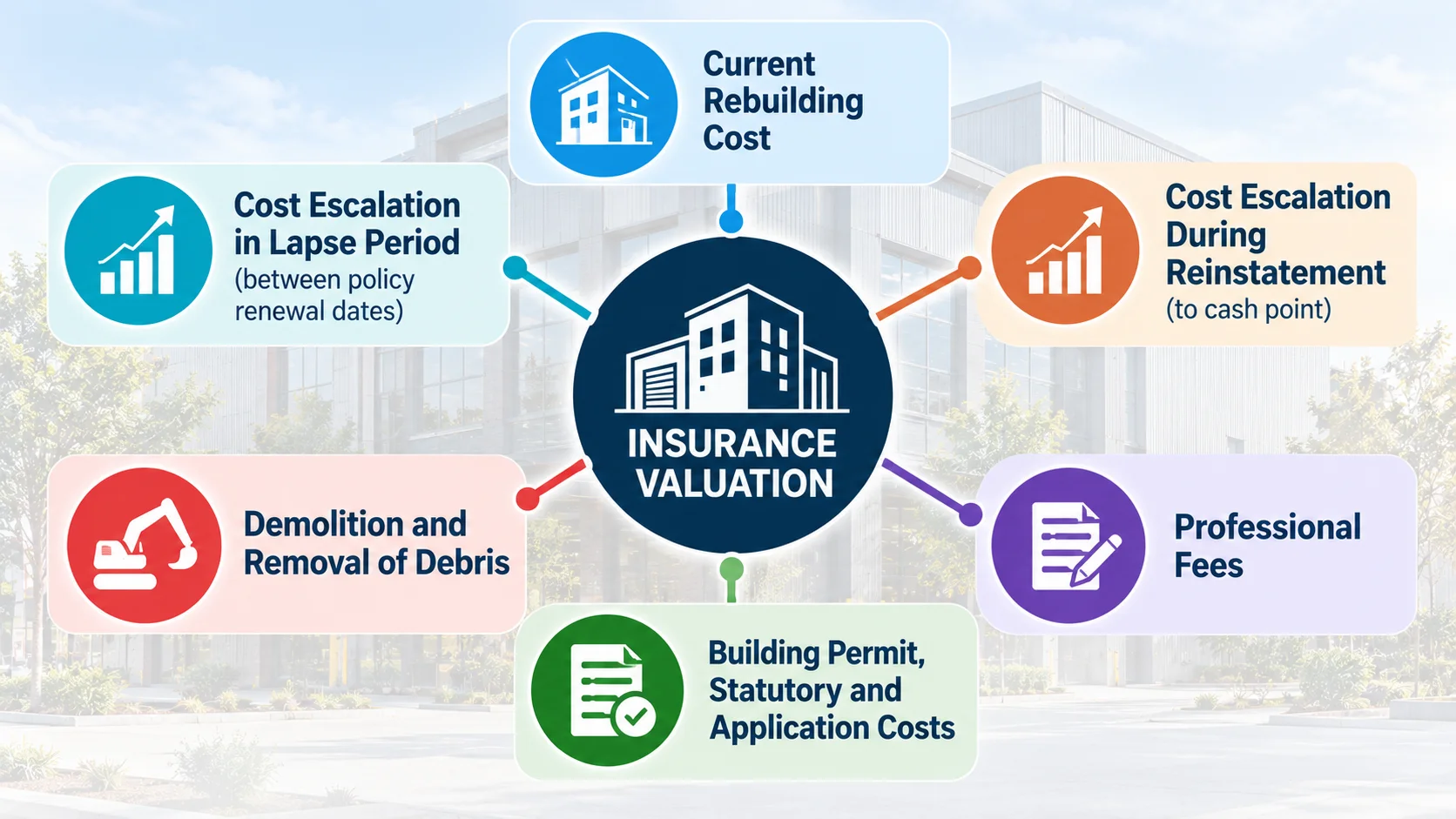
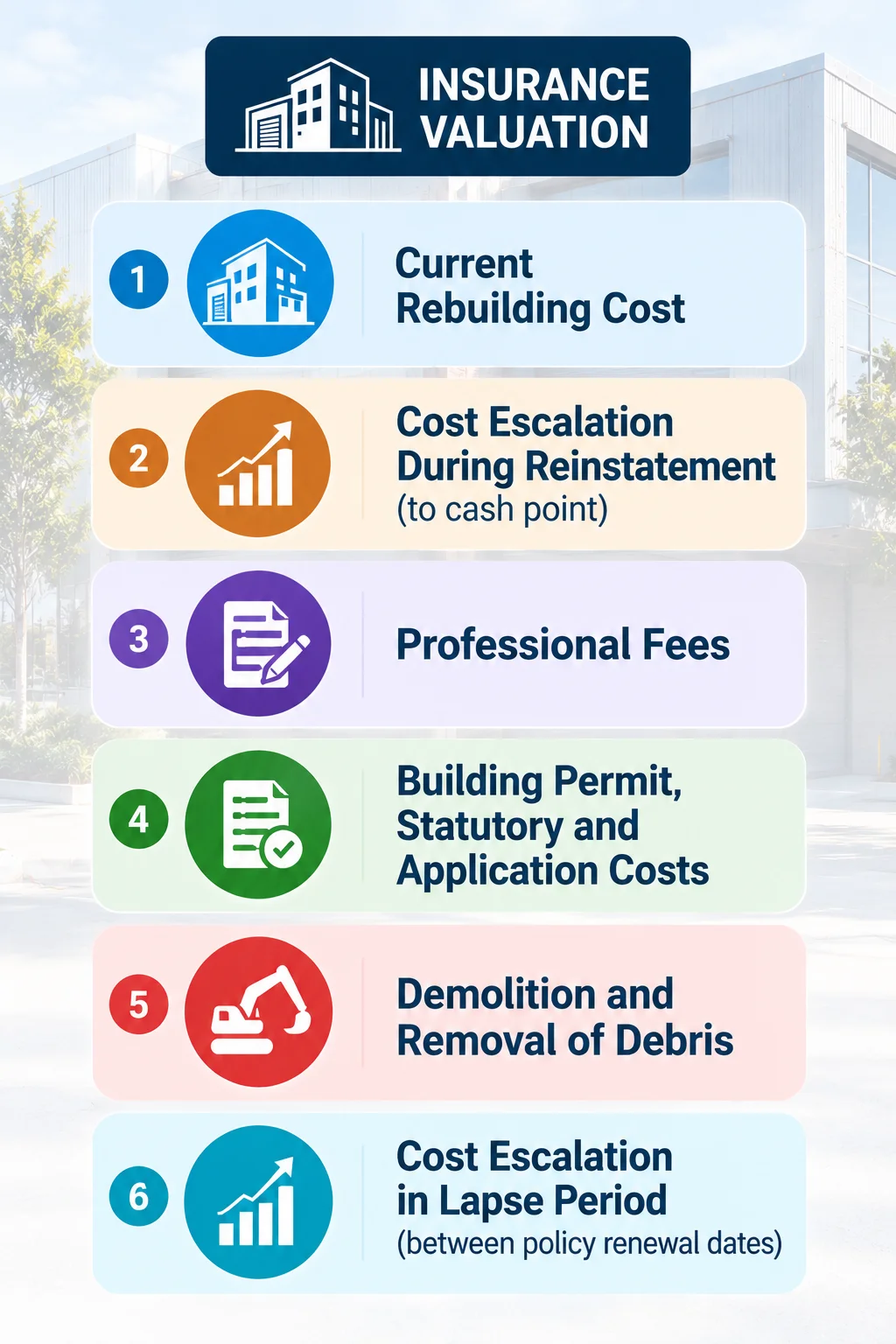
Unlike Market Value, which reflects the price a property might achieve in the open market, insurance reinstatement cost generally excludes land value and focuses on the costs associated with reconstruction. Depending on the scope of assessment, these may include demolition and debris removal, construction costs, professional fees, statutory requirements and allowances for cost escalation during the reinstatement period.
The assessment assists property owners and insurers in determining an appropriate building sum insured, subject to the terms, conditions and coverage provided by the insurance policy.
What Does an Insurance Valuation Include?
An insurance reinstatement cost assessment considers the estimated expenditure required to reinstate a building and its insured improvements following substantial damage or destruction.
Depending on the property and scope of the assessment, the principal cost components may include:
The assessment provides an estimate of reinstatement costs for insurance purposes. The appropriate sum insured and extent of cover should be confirmed with the insurer or insurance broker, having regard to the policy wording and applicable exclusions.
Factors Affecting Insurance Valuations in Melbourne
These factors are considered in developing an appropriate reinstatement cost assessment for the particular property, rather than relying solely on generic construction cost rates.
Why Why Engage an Experienced Professional for Insurance Valuations in Melbourne?
An insurance reinstatement cost assessment requires more than applying a standard construction rate to a building's floor area. Differences in building design, construction materials, services, site conditions and statutory requirements can significantly influence reinstatement costs.
An independent, property-specific assessment considers these factors together with relevant construction cost information and appropriate allowances for reinstatement.
ValuConsult's insurance valuation services consider:
Drawing on over 18 years of property valuation experience and a background in civil engineering, geotechnical engineering and building materials, ValuConsult provides independent insurance reinstatement cost assessments for residential, commercial, industrial and retail properties.
These assessments assist property owners, investors and Owners Corporations in reviewing their building sums insured. The assessment does not determine insurance policy coverage, which remains subject to the insurer's terms and conditions.
When Should You Review Your Insurance Valuation?
Building reinstatement costs can change over time due to movements in construction costs, alterations to the property and changes in building regulations. An insurance valuation that was appropriate several years ago may no longer reflect current reinstatement costs.
Property owners should consider reviewing their building insurance valuation in circumstances such as:
Regular reviews can assist in identifying potential underinsurance and provide a more informed basis for discussing the appropriate sum insured with an insurer or insurance broker.
FAQs About Insurance Valuations
Is an insurance valuation the same as a market valuation?
No. A Market Value assessment estimates the price a property may achieve in the open market, generally including land and improvements. An insurance valuation estimates the cost of reinstating the insured buildings and improvements following damage or destruction. Land value is generally excluded.
How often should a building insurance valuation be updated?
The appropriate frequency depends on the property, changes in construction costs and applicable insurance or statutory requirements. A review may be warranted following significant alterations, substantial construction cost movements or where the existing assessment is several years old.
Does an insurance valuation include demolition and professional fees?
These costs are commonly considered in a reinstatement cost assessment, where applicable. They may include demolition, debris removal, architectural and engineering fees, statutory charges and relevant cost escalation allowances. The precise inclusions depend on the agreed assessment scope.
Can ValuConsult undertake insurance valuations for commercial and industrial properties?
Yes. ValuConsult provides insurance reinstatement cost assessments for residential, commercial, industrial and retail properties throughout Melbourne and metropolitan Victoria, subject to the nature and complexity of the assignment.
Does an insurance valuation determine how much my insurer will pay?
No. An insurance valuation provides an estimate of reinstatement costs to assist in determining an appropriate building sum insured. Actual insurance coverage and claim payments depend on the policy terms, conditions, limits and exclusions.
Request an Insurance Valuation in Melbourne
Whether you own a residential investment property, commercial building, industrial facility or retail premises, an independent insurance reinstatement cost assessment can help you review the adequacy of your building sum insured.
ValuConsult provides property-specific insurance valuation assessments supported by relevant construction cost information and professional judgement.
Contact ValuConsult to discuss your property and obtain a quotation for an insurance reinstatement cost assessment.